
By Leo Wei, Founder and Director · Published
How much can a Sydney apartment actually earn on short-stay?
It is the first question every owner asks and the one the industry answers worst. Here is what genuinely moves the number, and the order to work it out in.
How much can a Sydney apartment earn on Airbnb?
It depends on location, bedrooms, how well the property is set up and how well it is priced — in that order. For a real anchor rather than a guess: a two-bedroom in the Sydney CBD we manage returned about $94,500 to its owner over twelve months, against $62,400 on the lease it came off. That is one owner-reported result for one property, not a forecast for yours. Anyone quoting you a number without your address is guessing.
Why a suburb is not an answer
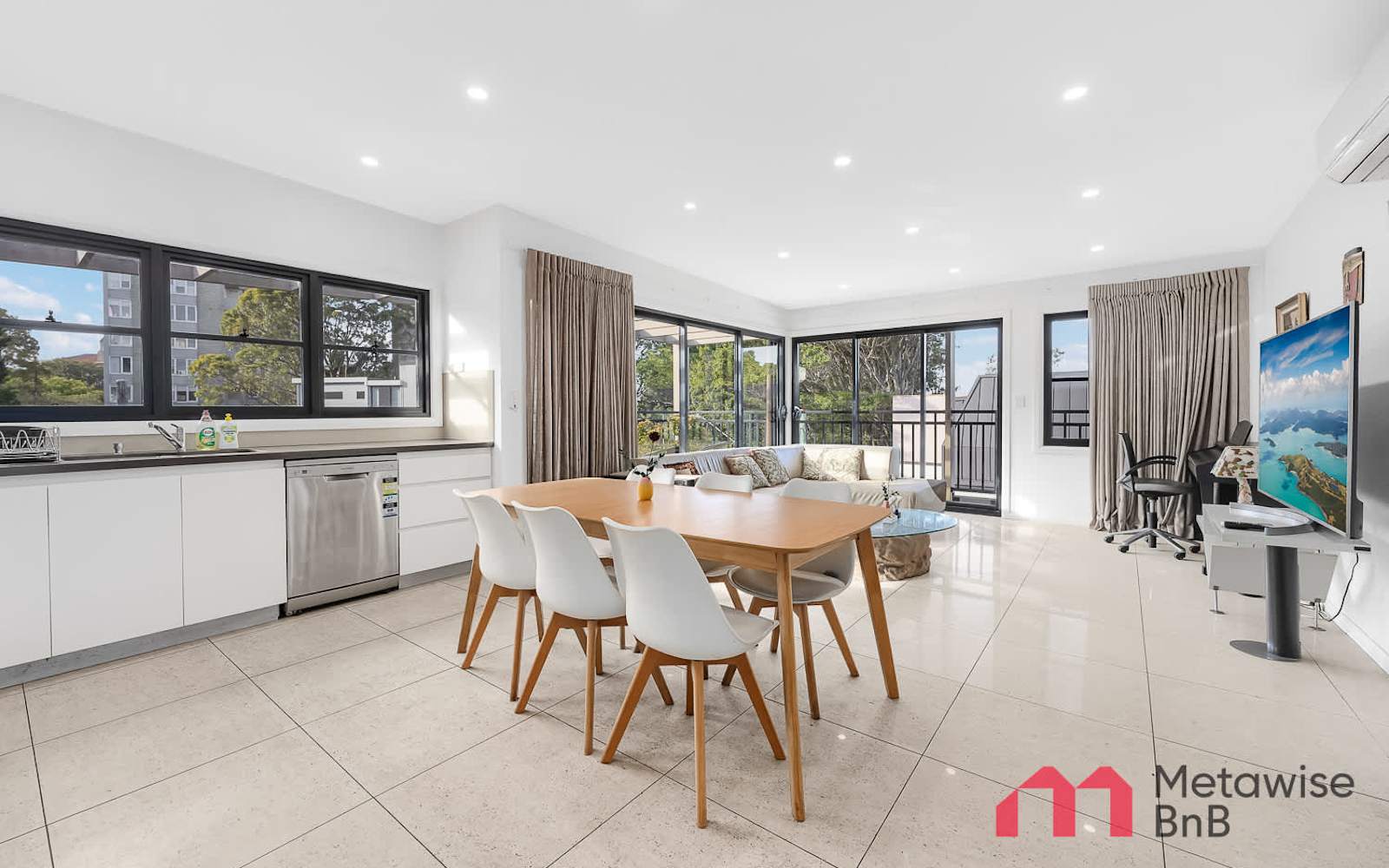
Ask what a two-bedroom in the Sydney CBD earns and you will get a figure. It will be wrong, because two apartments in the same building can be a thousand dollars a month apart. One faces the light well; one faces the harbour. One has a car space; one does not. One building allows short-term letting; the one across the road does not.
A number quoted before anybody has looked at the building is a marketing number. It is not useless — it tells you somebody wants your business — but it should not be the basis of a decision that involves furnishing a property.
The four things that actually set it
First, whether the building permits it at all. A scheme that prohibits short-term letting sets your income to zero, and no amount of styling changes that. It is the first thing to check and the cheapest.
Second, how many people can sleep there comfortably. Short-stay pricing follows heads more than square metres. A two-bedroom that genuinely sleeps four earns differently from one that sleeps four only if two of them are on a sofa bed.
Third, what you can walk to. The convention centre, a hospital, a university, a beach, a station. Guests pay for minutes, not for postcodes, and the properties that hold rate in a soft month are the ones with a reason to be there in winter.
Fourth, the calendar you are allowed to run. In Greater Sydney a non-hosted property is capped at 180 nights of short-term letting a year, so an annual figure built on 365 nights of demand is fiction. Bookings of 21 consecutive days or more sit outside that count, which is why the strongest Sydney calendars mix nightly letting with longer stays rather than chasing weekends alone.
Do the arithmetic in the right order
Start with gross booking revenue — what guests pay. Take out channel commission on the platforms. Take out payment processing. Take out the management fee and the GST on that fee. Take out cleaning and linen where they are not charged to the guest, and consumables. Take out utilities and internet, which a long-term tenant pays and a guest never does.
What is left is the number to compare with rent. It is materially smaller than the gross, and any comparison that skips this step flatters short-stay by a wide margin. Our York Street case study shows the whole subtraction in dollars, including the fee, precisely because the headline figure is the one people remember and the payout is the one they bank.
Why we send a range, not a number
Short-stay income moves with the season, the events calendar and how the property is priced week to week. A single number implies a precision nobody has. A range with the occupancy and nightly rate written underneath it can be checked, argued with, and held against us later — which is the point.
When you give us a full street address rather than a suburb, the estimate stops being a category average and becomes a comparison: what short-stay properties near yours actually achieved, at their real distance from your door, with the ones we manage nearby named.