
Published
The cash rate is 4.60%. What that does and does not mean for your rent
A quarter-point on a million-dollar loan is about $164 a month. The rules that govern when you can move the rent, and by how much, are a separate question — and the gap between the two is where owners get into trouble.
Can I increase the rent because my mortgage went up?
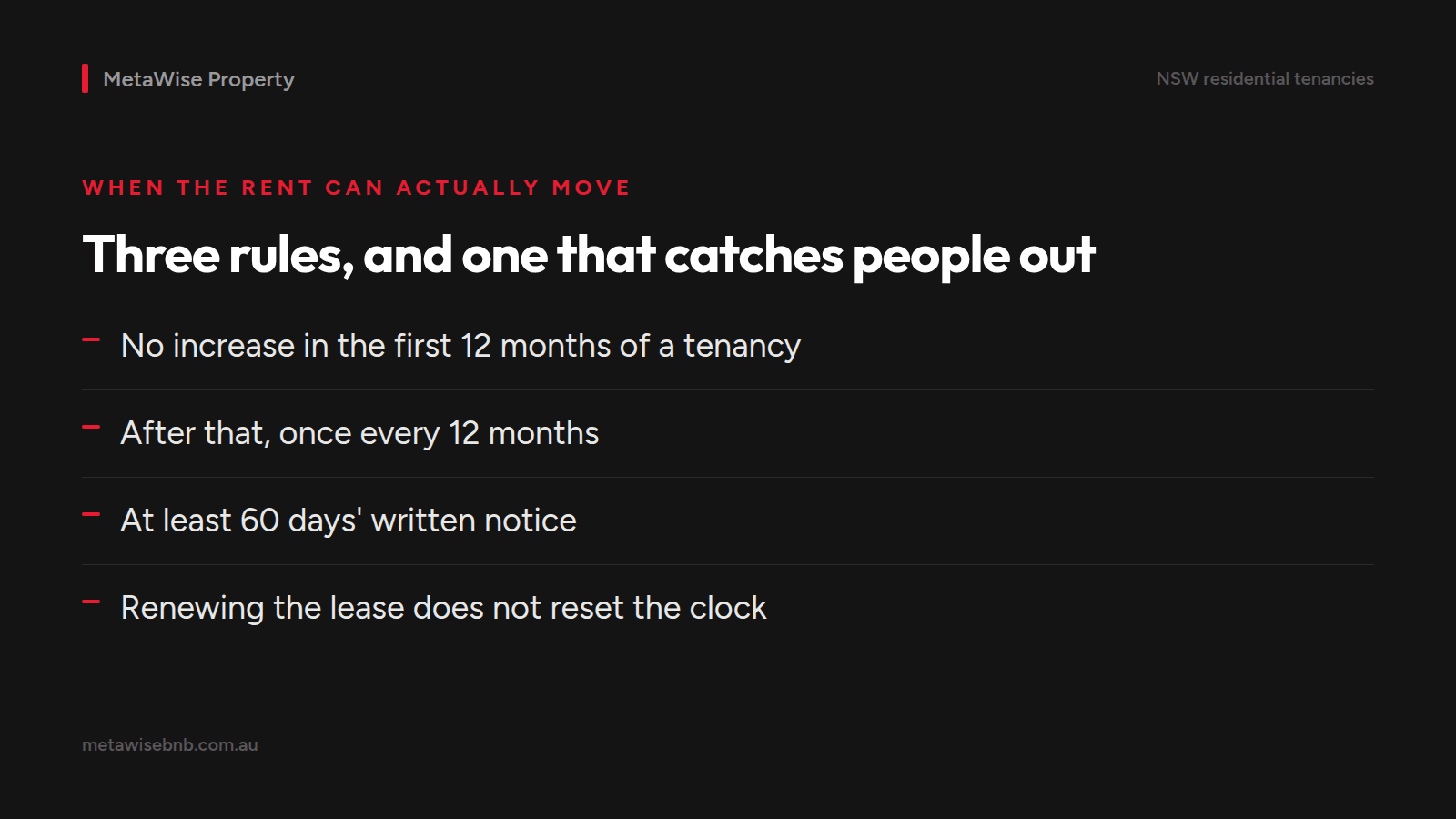
Not automatically, and not on that basis alone. In NSW the rent cannot rise in the first 12 months of a tenancy, nor more than once in any 12 months after that, and the tenant must get at least 60 days' written notice. Your borrowing cost is one piece of evidence about what the property costs to hold, but the amount has to stand up against comparable rents and the condition of the property. The owner carries the cash-flow gap first, and closes it with evidence rather than with the lender's letter.
What the Reserve Bank did
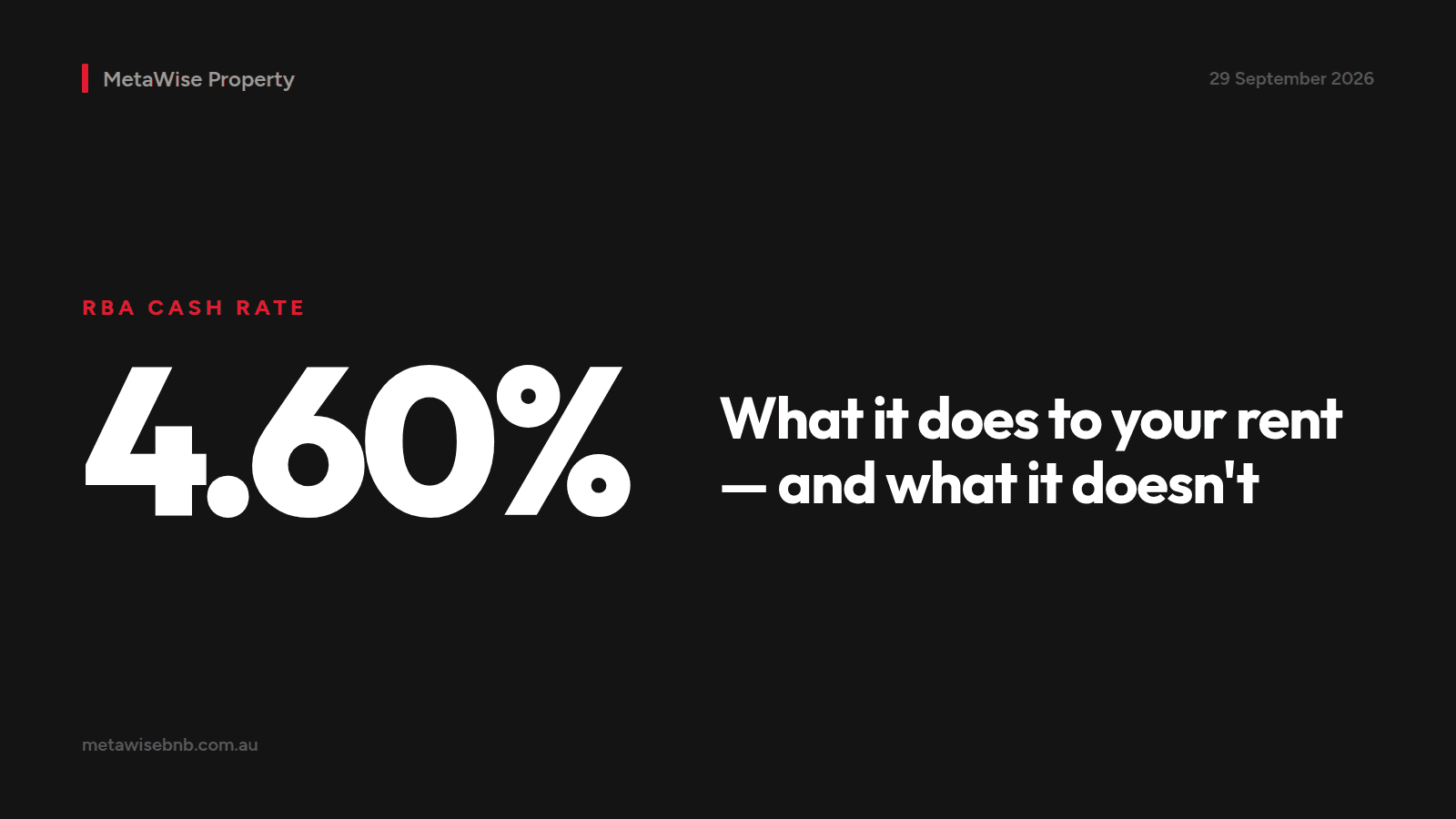
On 29 September 2026 the Reserve Bank raised the cash rate target by 0.25 percentage points to 4.60%. It was the third increase this year — after March and May — and takes the cash rate 0.75 percentage points higher than it was in January.
The Bank is still pushing against inflation above its target band. The Australian Bureau of Statistics reported the Consumer Price Index up 4.0% over the twelve months to August 2026, with trimmed-mean inflation steady at 3.6% for a third month.
If your lender passes the increase on, your repayment moves within a billing cycle or two. Your rent does not, and cannot, move on the same timetable.
What it costs you, per month
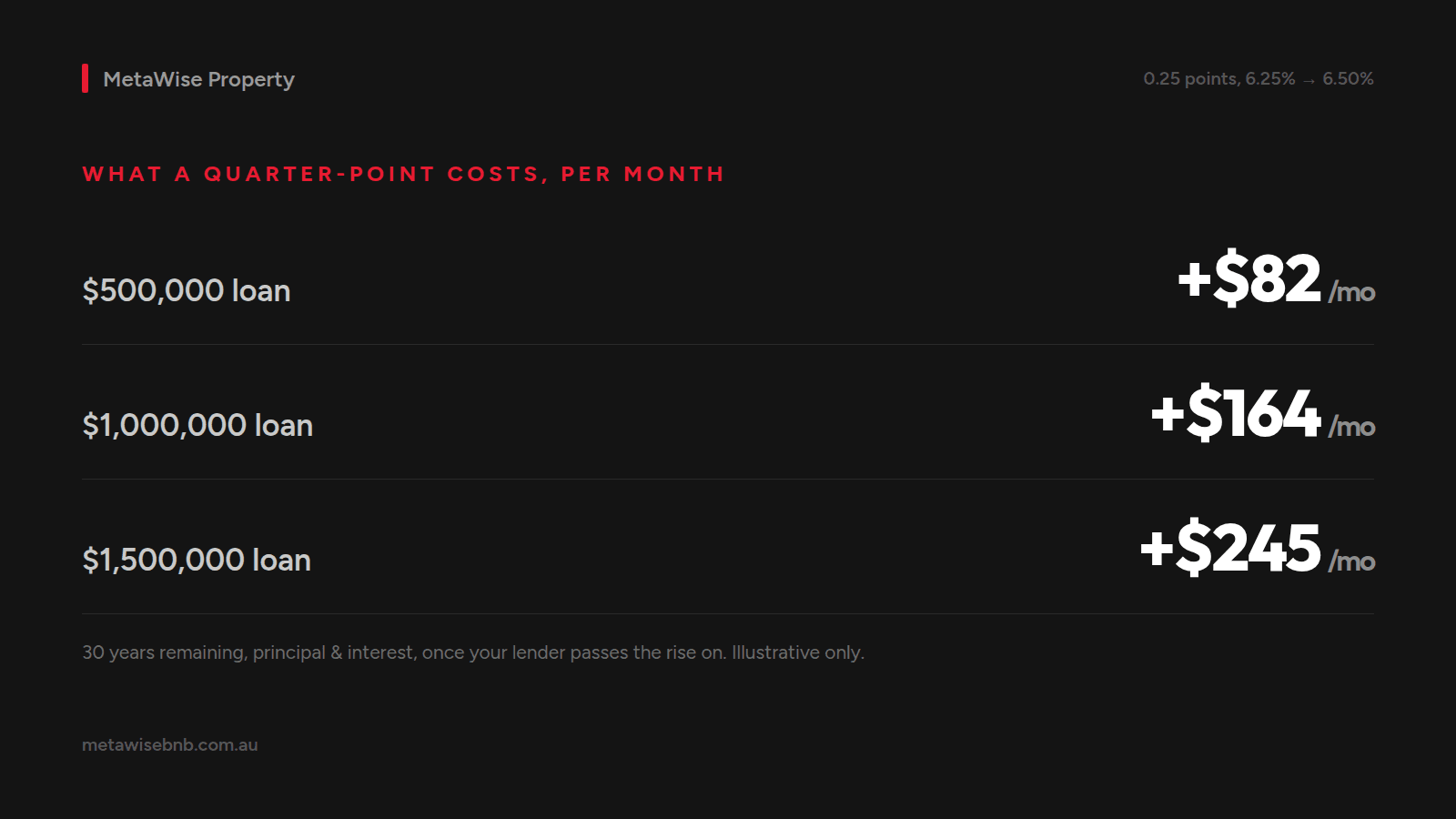
The figures below assume the lender passes on the full 0.25 percentage points, the loan rate moves from 6.25% to 6.50%, thirty years remain, and repayments are monthly principal and interest.
| Loan balance | Before | After | Extra per month | Per week |
|---|---|---|---|---|
| $400,000 | $2,463 | $2,528 | $65 | $15 |
| $500,000 | $3,079 | $3,160 | $82 | $19 |
| $750,000 | $4,618 | $4,741 | $123 | $28 |
| $1,000,000 | $6,157 | $6,321 | $164 | $38 |
| $1,200,000 | $7,389 | $7,585 | $196 | $45 |
| $1,500,000 | $9,236 | $9,481 | $245 | $57 |
| $2,000,000 | $12,314 | $12,641 | $327 | $75 |
Why that number is not a rent increase
In NSW the rent cannot be increased during the first 12 months of a tenancy, and after an increase there must be at least another 12 months before the next one. The landlord or agent must also give at least 60 days' written notice, stating the new total rent and the date it takes effect.
Renewing the lease does not restart the clock. Where the landlord is the same, at least one tenant stays and the tenant has not moved out between agreements, the previous increase still counts.
So a lender can raise your repayment months before the property is even eligible for a review. That is the gap, and no amount of correspondence closes it faster.
None of which makes your costs irrelevant. NSW guidance names comparable rents, the state of repair and the amenities, and the landlord's expenses among the things the Tribunal may weigh if an increase is challenged. Borrowing cost is part of the evidence. It is not the whole case, and it is not a formula.
The largest increase is rarely the best outcome
When costs rise the instinct is to move the rent to the highest number advertised in the suburb. That ignores what a reliable tenant is worth.
A real review compares three outcomes, not one: keeping the current tenant at a supportable new rent; reletting at a higher rent after vacancy, advertising, leasing and preparation costs; and holding the rent where the timing or the evidence does not support a rise.
An extra $38 a week on a million-dollar loan does not by itself justify $38 a week more in rent. If recently leased comparables support $20 to $25, asking for $38 weakens your position and buys a vacancy risk. The reverse holds too: where the property is genuinely below market, well maintained and the timing is lawful, a documented increase protects your return without being arbitrary.
How we run a rent review
We start about 90 days before the proposed date, not at the notice deadline — the tenancy history and the last increase date decide what is even possible, and finding a timing problem at renewal is finding it too late.
We build an evidence file: the median range from the NSW Government's Rent Check for the postcode, then the thing that actually carries weight — recently leased comparables rather than optimistic advertisements — plus differences in condition and amenities, what is competing with the property right now, and its own leasing history.
We total the real holding cost — loan repayments, strata, rates, water, insurance, compliance, repairs, management and reletting, and the cost of a vacancy. That is how an owner sees what the asset is actually doing. It does not convert every dollar of expense into a dollar of tenant liability.
We weigh the tenancy itself: payment history, care of the property, length of occupancy, outstanding repairs, likelihood of renewal.
Then we talk to the tenant before the notice, explain the basis, listen, and put whatever is agreed in writing. A smaller agreed increase often nets more than a larger one followed by four weeks empty. Because NSW generally allows one increase in twelve months, we do not promise anyone a second step-up later in the year.
If the tenant disputes it
A tenant who believes an increase is excessive can apply to the NSW Civil and Administrative Tribunal within 30 days of being given the notice. It is the tenant who has to make that case, and it is decided on evidence — comparable rents, the state of repair and the amenities, and the landlord's expenses are the things NSW guidance says the Tribunal weighs. The Tribunal decides what the rent should be and for how long.
Nobody should assume the outcome. An increase with nothing behind it may not hold up; equally, a lawful increase supported by genuine comparables, the condition of the property and documented expenses should not be abandoned merely because a hearing is possible.
The aim is to settle it before that point. If it cannot be settled, a clear chronology, a compliant notice and an organised evidence file are worth considerably more than the sentence "interest rates went up".
What to do this month
Check when the tenancy started and when the rent last moved. Confirm whether your lender has actually passed the increase on, and what the new repayment is. Update the annual holding-cost budget for the property.
Get current comparable evidence — leased, not asking. Deal with outstanding repairs before they become the tenant's argument. Start the conversation early, keep any agreement in writing, and serve the notice properly with at least 60 days.
Then compare the increase you are considering against the cost of losing the tenant. One of those numbers is on the notice. The other turns up later, as an empty property and a letting fee.
Common questions
- How often can rent be increased in NSW?
- Generally not during the first 12 months of a tenancy, and not more than once in any 12-month period after that. Limited transitional rules can apply to some fixed-term agreements that began before 13 December 2024.
- How much notice does a NSW rent increase need?
- At least 60 days in writing. The notice must state the new total rent and the date it takes effect, and be signed, dated and correctly addressed to the tenant.
- Does renewing the lease reset the 12-month clock?
- No. Where the landlord is the same, at least one tenant remains and the tenant has not moved out between agreements, the date of the last increase still counts.
- Can a tenant challenge the increase?
- Yes. A tenant can apply to NCAT within 30 days of being given the notice. It is the tenant who has to make the case that the increase is excessive, and the Tribunal weighs comparable rents, the condition and amenities of the property and the landlord's expenses before deciding what the rent should be.
- Should I just ask for the maximum the market shows?
- Not automatically. Weigh the comparable evidence, the condition of the property, the value of a tenant who pays and stays, and what four weeks of vacancy plus reletting costs. The highest advertised rent is not always the best net result.
General information about NSW residential tenancies, current at 30 September 2026. It is not legal advice and not financial advice, and it does not take your circumstances into account. Check the current rules and your own loan before acting.