
Short-stay and mid-term management in Darlinghurst
Darlinghurst is the only suburb covered on this site that averaged above 80% occupancy for the year, and it held 80% or better for six consecutive months. It also cut its nightly rate in nine months out of twelve to do it. A full calendar and a falling rate are the same decision seen from two sides, and it is worth knowing which one a property is being managed for.
How we read this market
MetaWise manages a studio in Darlinghurst, so the operational detail on this page is first-hand. The market figures are not, and should not be read that way: they come from the PriceLabs short-term rental index for the Darlinghurst official boundary — 414 active listings, twelve months to September 2026 — and describe the whole suburb. What our own property earns is the owner's business, and stays theirs.
Demand
What actually fills a calendar here
St Vincent's and the longest stays in the inner city
Darlinghurst books the longest median stay of any suburb here — five nights most months, six in January and July. The hospital precinct is a large part of why: treatment cycles, visiting clinicians and families staying close produce bookings measured in weeks, not weekends.
The city edge, at a step down from city prices
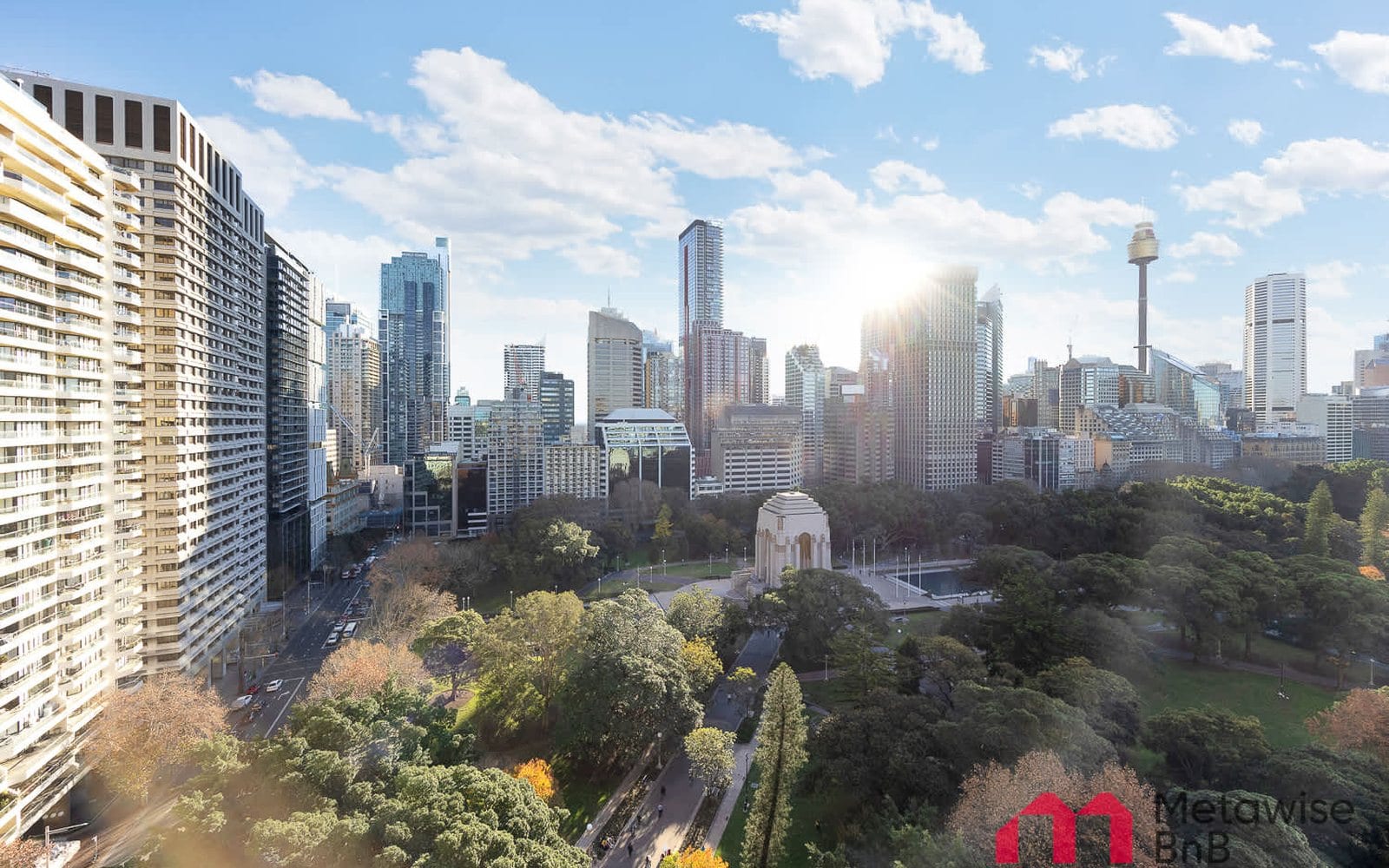
Hyde Park is at one end and the CBD towers are a short walk beyond it. For a corporate guest the practical difference from staying in the city is a few minutes; the difference in nightly rate is considerably more, and that arbitrage is what keeps the midweek calendar full.
Oxford Street and a genuine year-round night economy
Unlike suburbs that depend on a season or an event calendar, Darlinghurst has consistent demand from its own streets. That is the structural reason occupancy holds above 80% from October through March while rate-sensitive suburbs are discounting.
Property types
What works here
- Studios and one-bedroom apartments in full-service buildings near Hyde Park
- Apartments suited to five-night-plus stays within walking distance of St Vincent's
- Terraces and converted buildings on the Oxford Street side
Operations
What makes it hard
- Occupancy here was bought with rate. The average nightly rate fell year-on-year in nine of twelve months, including 13.7% in June and 9.1% in May. A property that matches the market's discounting without needing to is leaving money behind.
- The long median stay changes the operation. Fewer turnovers, but mid-stay servicing, laundry and a guest who notices everything a weekend guest never would.
- With 414 competing listings, this is the second most crowded market covered here. Rate positioning needs to be deliberate and daily.
Rules
Compliance in this area
General information about how the NSW framework applies here, not advice on your building.
- Darlinghurst is in the City of Sydney and inside Greater Sydney, so the 180-night non-hosted cap and STRA registration both apply.
- The long median stay is strategically useful: a booking of 21 nights or more falls outside the 180-night count, and Darlinghurst's demand mix produces those more naturally than any other suburb covered here.
- Buildings around the hospital and Oxford Street include a mix of modern strata and converted older stock, and the by-law position varies sharply between the two.
Coverage
Suburbs we service from here
Darlinghurst · Surry Hills border · Paddington surrounds · Woolloomooloo · East Sydney
Questions
Darlinghurst — the highest occupancy in the inner city, and what it cost — frequently asked
Does the highest occupancy mean the highest income?
Not on its own. Darlinghurst averaged 80.3% occupancy, the best of the suburbs covered here, but annual revenue per listing came to roughly A$82,677 — behind Pyrmont at about A$91,256 and well behind Kirribilli at about A$123,980, both of which run lower occupancy at higher rates. Occupancy is a means, not the result.
Why is Darlinghurst good for longer stays?
The hospital precinct and the relocation market produce them, and the data shows it: median stays run five nights for most of the year and six in January and July, the longest of any suburb here. That also matters for the 180-night cap, which only counts non-hosted stays under 21 nights.
Is the falling nightly rate a reason to avoid Darlinghurst?
It is a reason to price deliberately rather than follow the market. The suburb-wide rate fell 3.3% across the year while occupancy rose slightly, which describes operators competing on price in a crowded field. A property with a real advantage does not have to join in.